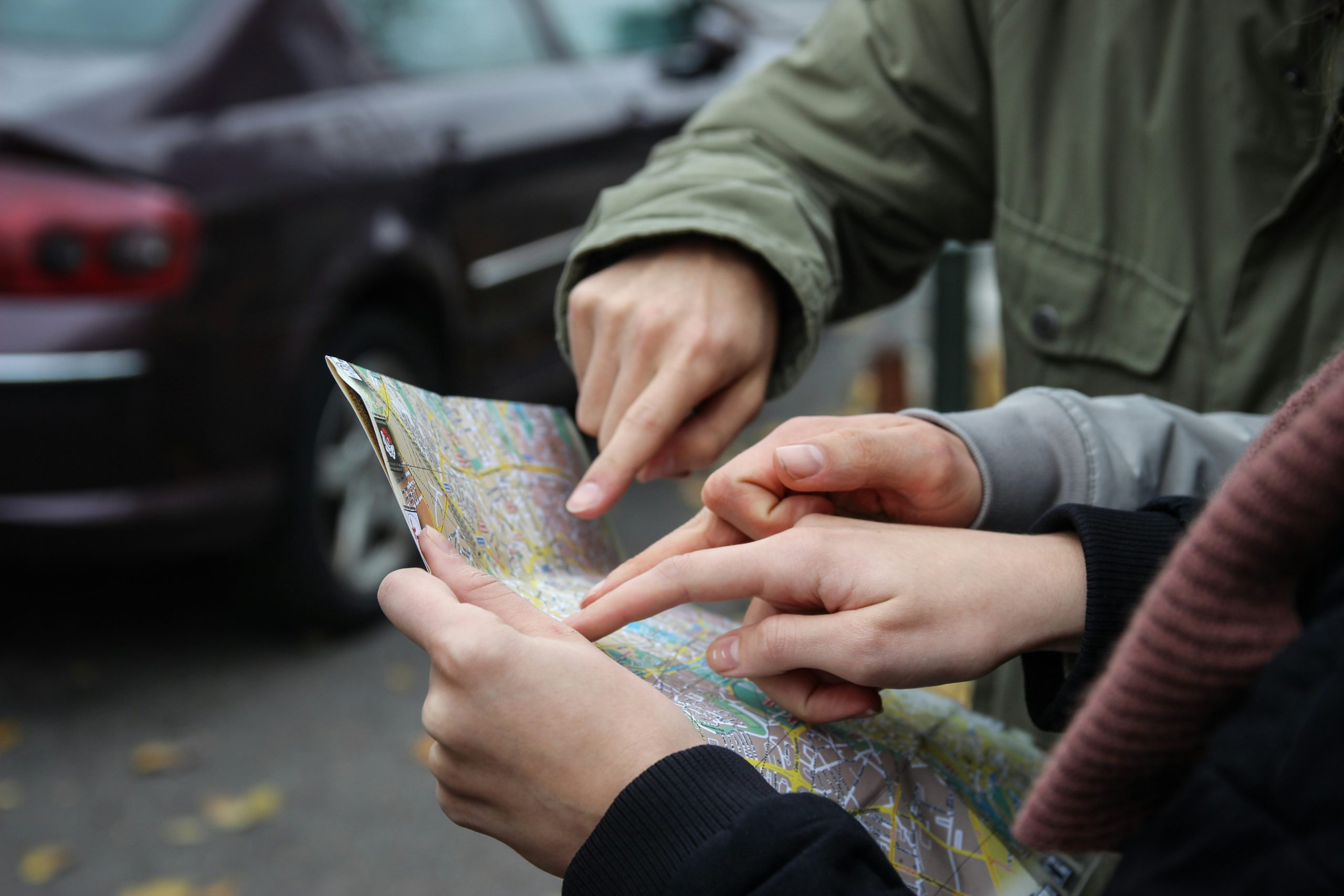
When we travel, whether it’s a GPS or a reliable map, they help us navigate all of the roads, alley ways, highways, bridges, etc. When we are project working on a project or figuring out a problem, it’s helpful to map-out a pathway to what we are trying to accomplish. Collaborative Counselling also use maps to help us achieve personal goals.
Collaborative Helping Maps assist persons attending counselling sort through all the complex issues they may present to a counsellor. Mapping collects all the complexities that surface in counselling and make them more visible, tangible and therefore, more manageable. Mapping in counselling promotes a collaborative process where everyone has an opportunity to build an understanding of the dominant narrative. The process supports resourcefulness, and accountability in practice. The Collaborative Helping Map asks four key questions:
Organizing Vision
Where would you like to be headed in your life? Developing a mutually shared, proactive, meaningful, and sufficiently concrete vision Building a foundation of motivation, resourcefulness, and community
Obstacles What gets in the way? Supports What helps you get there?
Plan
What needs to happen next? Developing a mutually agreed upon plan that draws on supports to address obstacles to achieve vision in a way that is proactive and meaningful Outlining an action plan
The collaborative helping map is designed to “help individuals, couples and families envision desired lives, address long-standing problems, and develop more proactive coping strategies.” One aspect of the collaborative mapping process that I personally like is that every session begins with a re-telling of the positive vision the person has for themselves, the relationship, and family. In counselling, individuals often start by sharing their problem-saturated story, and they never seem to move out of this position, dwelling on narrative session after session. The collaborative-helping map helps people focus on their preferred vision for the future. Working with a collaborative helping map help, individuals “lean” towards the positive in order that they can socially construct a more preferred wat of being.
Exercise
If you are struggling with a particular issue, use the collaborative helping map to assist you to work-through the issue to achieve your preferred vision. Ask a family member or good friend to work through the process with so that you can benefit from alternative perspectives.
Reference: William C. Madsen. Family Process. 50:529-543, 2011.